Pump System Seismic Structural Analysis: Building Vibration
Summary
Mechanical Solutions, Inc. (MSI) performed a comprehensive seismic structural analysis pump systems for three identical large pump used in both low-activity and high-activity nuclear waste treatment processes. Using advanced finite element analysis (FEA) and conservative seismic assumptions, MSI evaluated structural integrity, vibration behavior, and fatigue performance to the complete assemblies to verify compliance with Seismic Category 1 (SC-1) requirements.
The analysis confirmed that all calculated stresses, bolting loads, and natural frequencies were within allowable limits. These results demonstrated that the pump systems can maintain structural integrity and operate safely during seismic events.
Why Was a Seismic Structural Analysis Required for the Pump Systems?
A pump manufacturer required independent verification that three large pump systems could safely withstand design-basis seismic events while operating in a nuclear waste treatment facility.
Because the pumps were classified as Seismic Category 1 (SC-1) equipment, the analysis was required to demonstrate that the systems could maintain integrity and continue safe operation during seismic conditions. The evaluation specially verified:
- Structural integrity during earthquake loading
- Acceptable stress levels in all pressure-retaining components
- Adequate separation between natural frequencies and excitation sources
- Compliance with nuclear safety requirements and fatigue criteria
What Components Were Included in the Seismic and Vibration Analysis Scope?
The rotating machinery seismic analysis evaluated the complete pump assembly, including:
- Pressure-containment casing
- Nozzle connections and local reinforcement areas
- Support structure and foundation interface
- Driver or motor attachments
- Rotating components, including impellers and shaft
This holistic approach ensured accurate representation of mass, stiffness, and load paths throughout the pump system.
How Was Finite Element Analysis Used to Evaluate Seismic Loads?
MSI used advanced finite element analysis (FEA) techniques to perform an equivalent static seismic analysis of the pump systems. The seismic loads were combined with other critical operating loads:
- Nozzle loads
- Internal pressure
- Impeller thrust
- Torque loading
The FEA model also incorporated several key factors to accurately represent the system behavior, including:
- Motor mass and attachment stiffness
- Rotating component inertia
- Conservative assumptions for uncertain piping configurations and pipe support conditions
This comprehensive modeling approach ensured a robust and defensible evaluation of worst-case loading scenarios.
How Were Natural Frequencies and Building Vibration Addressed?
To assess potential building vibration and dynamic amplification risks, MSI conducted a modal analysis to identify the pump system natural frequencies and corresponding mode shapes.
These frequencies were then:
- Compared to pump running operating speed
- Evaluated against known excitation sources
- verified to be sufficiently separated to avoid resonance
Based on this analysis, dynamic amplification of quasi-static seismic stresses was determined to be minimal.
What Did the Seismic Stress and Fatigue Analysis Show?
The seismic structural analysis demonstrated that:
- Seismic stresses in all pump components were within allowable limits
- Peak stresses remained below the material yield strength
- All bolting met the applicable stress acceptance criteria
In addition, normal operating stresses from:
- Internal pressure
- Nozzle loading
- Up-thrust
were well below expected load cycling thresholds. This indicates that fatigue failure was not anticipated over the service life of the equipment.
What Was the Final Conclusion of the Seismic Analysis?
Based on the combined seismic, structural, vibration, and fatigue analyses, MSI concluded that:
- All three pump systems met Seismic Category 1 (SC-1) requirements
- Structural integrity would be maintained during seismic events
- No fatigue-related failures were expected under normal operation
The pump systems were deemed suitable for use in nuclear waste treatment facilities subject to seismic loading.
Frequently Asked Questions
What is Seismic Category 1 (SC-1) equipment?
Seismic Category 1 (SC-1) equipment refers to safety-related equipment in nuclear facilities that must remain structurally intact and capable of performing its safety function during and after a design-basis earthquake.
Why is seismic analysis critical for nuclear pump systems?
Seismic analysis verifies that pump systems can withstand earthquake loading without compromising pressure boundary integrity, experiencing vibration, or developing fatigue-related damage.
What is equivalent static seismic analysis?
Equivalent static seismic analysis is a method that converts dynamic earthquake forces into conservative static loads applied to an FEA model to evaluate structural stresses and overall system response.
How does building vibration affect pump systems?
Building vibration can introduce dynamic amplification if pump natural frequencies align with excitation sources, which can increase stress and vibration levels.
Does this analysis address fatigue failure?
Yes. Both seismic and normal operating loads were evaluated to verify that stresses remain below fatigue thresholds.
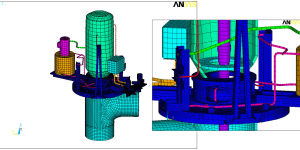 Figure 1. Left - Finite Element Model including pressure containment casing, nozzle attachments, support system, and driver. Right –close up view.
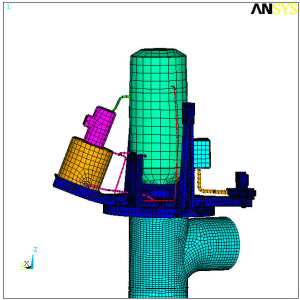 Figure 2. A heat exchanger was one key component in the model and resultant analysis (1st Vertical Natural Frequency of heat exchanger shown).
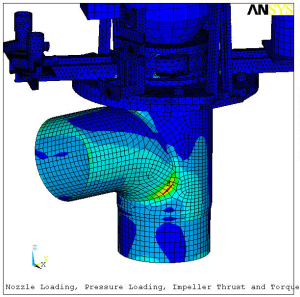
Figure 3. Nozzle load stress distribution - von Mises Stress (psi)