
Wastewater Digester Compressor Piping Vibration: Root Cause and Solution
This blog by MSI’s Maki Onari discusses how a combination of great techniques, such as, Operating Deflection Shape (ODS), Motion Magnified Video, and Modal Analysis works well together.
Key Findings
-
- Problem: Compressor piping vibration and chattering noise
- Cause: Pressure pulsations interacting with a piping structural natural frequency
- Pressure pulsation frequency: Approximately 20 Hz (within running speed range)
- Testing: VibVue Motion Magnified Video (MMV), EMA, ODS, and monitoring with triaxial accelerometers
- Solutions: Inspect and adjust piping hangers to reduce vibration and noise while monitoring piping vibration with MMV – the hangers were loose and unloaded during the testing. If this didn’t help, MSI offered to evaluate added mass and/or using tuned vibration absorbers to detune the piping.
Summary
A wastewater digester complex experienced excessive compressor piping vibration and loud chattering noise. Mechanical Solutions (MSI) conducted specialized vibration testing to identify the root cause and to provide recommended solutions.
MSI used the following test and analysis methods to diagnose the problem and provide targeted solution recommendations:
- VibVue® Motion Magnification Video (MMV) (Figure 1)
- Experimental Modal Analysis (EMA or impact)
- Operating Deflection Shape (ODS), and
- Continuous vibration monitoring using triaxial accelerometers
The testing results indicated that a beating phenomenon was occurring because of slight variations in the belt driven reciprocating compressor speeds (Figures 2 and 3), causing the pressure excitation to rise and fall in severity as the pulsations from each compressor drifted in and out of phase with each other.
While acoustic resonance was not contributing to the problem, ODS testing (Figure 4) impact testing (Figures 5 and 6) revealed a piping network structural natural frequency in the piping system near the pressure pulsation frequency of 20 Hz that was exacerbating the problem.
Resonant excitation of this natural frequency resulted in large deflections of a localized section of pipe (Figure 6) during times when the compressors’ pulsations reinforced each other, as compared to reduced pressure excitation during times when the compressors' pulsations canceled each other out. Addressing the motion of this particular section of pipe was key to eliminating the nuisance noise.
Figure 1 – Top and Bottom. Example VibVue® videos. VibVue® video allowed vibration observation and measurement and generated FFT spectra without having to use a lift or ladders so that the problem frequency and the problem piping network section could be more safely determined. This led to a more focused and efficient use of impact and ODS testing.
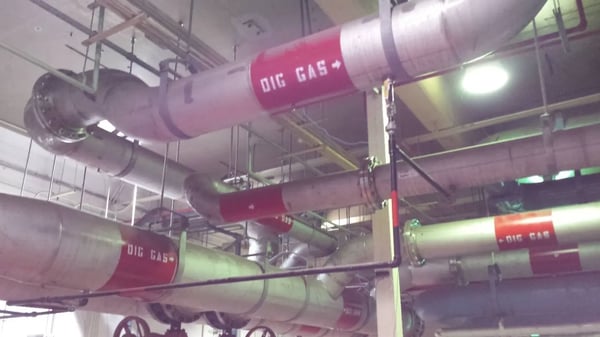
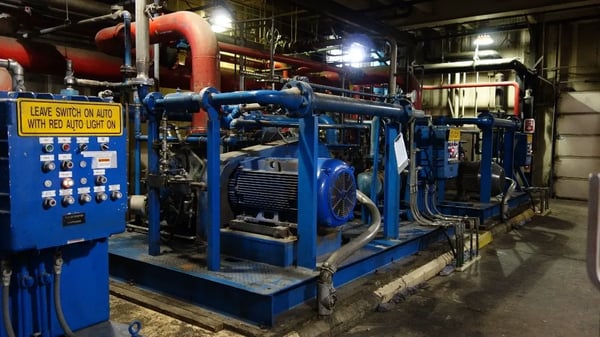
Figure 2. Top - Still photos of a problem portion of the piping network. Bottom – Belt driven compressors used in the wastewater digester process generated normal pressure pulsation levels. Testing revealed that the piping had a lightly damped natural frequency that was excited when the compressors (especially all three) operated at a running speed near 20Hz.
Figure 3. VibVue video of one of the three compressor trains in operation.
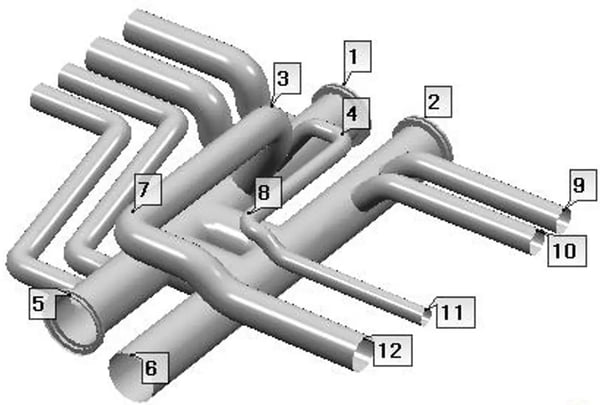
Figure 4. Bottom: Field generated 3D model of the piping network section of interest based on VibVue results. It shows the 12 locations where vibration data in three directions was collected to create the ODS animation. Top: ODS animations showing piping network relative (exaggerated) motion at the already identified problematic 20Hz compressor operating speed.
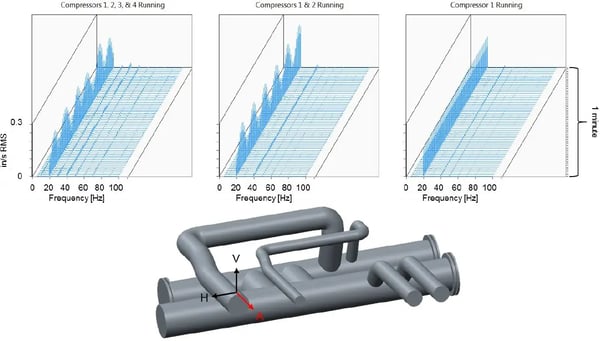
Figure 5. Vibration response at the identified location on the piping network quantified based on one, two, or all three compressors operating. The plant required the flexibility to safely and reliabley operate the compressors in any combination.
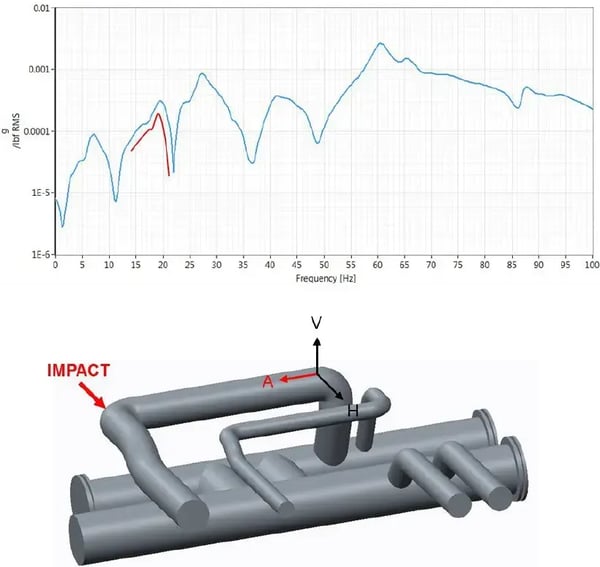
Figure 6. Bottom - Hammer impact and triaxial measurement locations for the experimental modal analysis (impact) test that was done to confirm piping natural frequencies. Top - The Frequency Response Function (FRF) plot is the key deliverable from an impact test. It provides frequency and damping data for the pipe system’s natural frequency. The 20Hz frequency was being excited by compressor pressure pulsation.
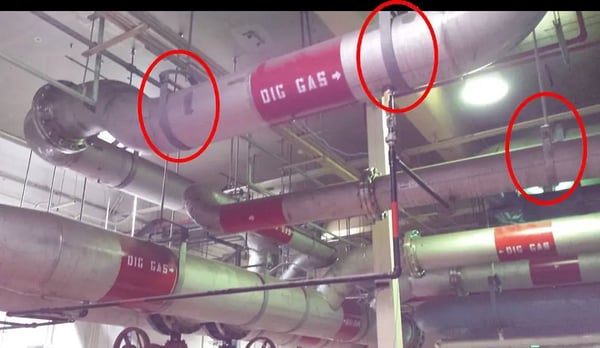
Figure 6. The identified pipe hangers had very high motion during time periods when the worst noise levels were observed. Testing identified the corresponding frequency was 20Hz. The hangers were loose and unloaded during some or all of the testing. The first recommendation was to inspect and adjust piping hangers while monitoring vibration and noise from a standoff distance with VibVue®.
Frequently Asked Questions
What causes compressor piping vibration?
Rotating machinery piping vibration can result from pressure pulsations, mechanical forces, inadequate supports, structural resonance, or acoustic resonance. In this case, pressure pulsations interacting with a piping natural frequency near 20 Hz was amplifying pipe movement.
How do you troubleshoot compressor piping vibration?
Engineers use vibration and acoustic measurements, along with their experience, to identify the root cause of the problem. Often times, the recommended solution can be provide based on the specialized test results. In some case, Finite Element Analysis (FEA) is used to help determine the optimal solution.
What measurement methods are used?
Motion-magnified video (VibVue®) is highly effective for safely measuring vibration throughout a piping network because it does not require lifts or ladders. It can quickly identify the physical locations and frequencies that require further investigation. More traditional testing methods—including microphones, experimental modal analysis (EMA), operating deflection shape (ODS) analysis, continuous monitoring, and pressure pulsation measurements—can also be used to identify excitation frequencies and acoustic or structural resonances.
What does MSI use for pressure pulsation measurements?
MSI technicians and engineers are experts at using dynamic pressure transducers for field testing. This case history discusses a non-intrusive method for measuring pressure pulsation using high frequency accelerometers.
How are pressure pulsation measured non-intrusively?
MSI uses high frequency vibration measurements that effectively turn the piping or machinery casing into a microphone. This method has proven especially valuable for solving suction induced vibration issues with centrifugal pumps.
How can compressor piping vibration be reduced?
Vibration can be reduced by adjusting piping supports, shifting natural frequencies, installing tuned vibration absorbers, and controlling compressor speeds and their excitation frequencies.
How can the risk of damaging piping vibration be reduced before a rotating machinery system is installed or modified?
A pre-construction design assessment of the rotating machinery system is a proven method for reducing vibration risk for new or modified installations.