Resonance in a Nuclear Charge Pump Caused by a Shift in Natural Frequency
Diagnosing High Vibration in a Nuclear Power Plant Charge Pump
Summary
A nuclear power plant in the Northeastern United States experienced a sudden and severe increase in vibration in one of its motor-driven charge pumps. Plant personnel suspected a cracked shaft following a motor trip followed by an automatic restart during coastdown.Rather than disassembling the pump the plant operator contacted Mechanical Solutions, Inc. (MSI). MSI performed specialized vibration testing and a Finite Element Analysis (FEA) of the pump including its base plate, nearby floor and piping. The time-sensitive test effort revealed that the intermittent lowering of the pump’s structural natural frequency so it was near running speed (i.e., resonance) was caused by a soft foot condition. The issue was resolved by properly torquing the pump casing bolts, restoring the natural frequency and eliminating resonance. The FEA modeling was requested because plant management didn’t initially believe the solution was so straight-forward.
What Type of Equipment Was Experiencing Resonance?
Nuclear Charge Pump Operating at High Speed
• Machine Type: Motor-driven charge pump
• Industry: Nuclear power generation
• Operating Speed: 4,812 RPM
• Location: Northeastern United States
Charge pumps are critical components in nuclear power plants, and excessive vibration can pose reliability and safety risks if not addressed promptly.
What Symptoms Indicated a Potential Resonance Problem?
Abnormal Vibration and Erratic Shaft Motion
Plant personnel observed several concerning symptoms:
- Motor power trip during operation, followed by an automatic restart during coastdown
- Vibration amplitude increased from 0.05 in/s peak to 0.22 in/s peak
- Peak vibration occurred at 1× running speed on the outboard bearing housing
- Direction of concern: Horizontal
- Erratic shaft vibration amplitude and phase angle behavior
These symptoms raised concerns about a possible shaft crack or internal mechanical damage.
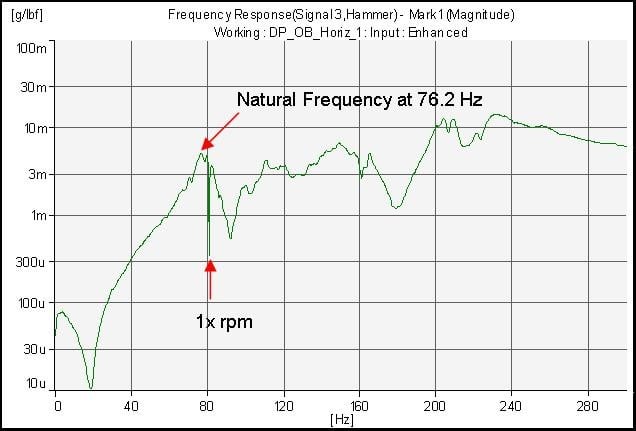 Time Averaged Pulse (TAP) experimental modal analysis (impact) test results show the structural natural frequency with 5% of running speed (i.e., resonant condition causing the high vibration).
Why Was MSI Brought in for Advanced Testing Instead of a Teardown?
Avoiding Unnecessary Disassembly in a Nuclear Environment
Given the complexity, cost, and outage implications of disassembling a nuclear charge pump, the plant chose to pursue an independent non-intrusive diagnostic testing to identify the root cause quickly and accurately.
What Diagnostic Methods Were Used to Identify the Root Cause
Advanced Vibration and Structural Analysis Techniques
MSI applied a combination of experimental and analytical methods, including:
- Experimental Modal Analysis (EMA or impact) testing
- Operating Deflection Shape (ODS) testing
- Condition monitoring and vibration analysis
- Finite Element Analysis (FEA)
This integrated approach allowed MSI to evaluate both dynamic behavior and structural integrity under operating conditions.
What Was the Root Cause of the High Vibration
Structural Natural Frequency Shift Causing Resonance
The investigation revealed that:
- A lightly damped structural natural frequency shifted downward
- The natural frequency moved to within 5%of the pump running speed
- This frequency coincidence created a resonant condition at the outboard bearing housing
Why Was the Vibration Behavior Erratic?
ODS testing identified a soft foot condition at the outboard end of the pump. Soft foot introduces non-linear stiffness and variable contact, which explains the inconsistent vibration amplitude and phase behavior.
The soft foot condition was likely initiated during the electric power loss event, which altered the pump’s support conditions.
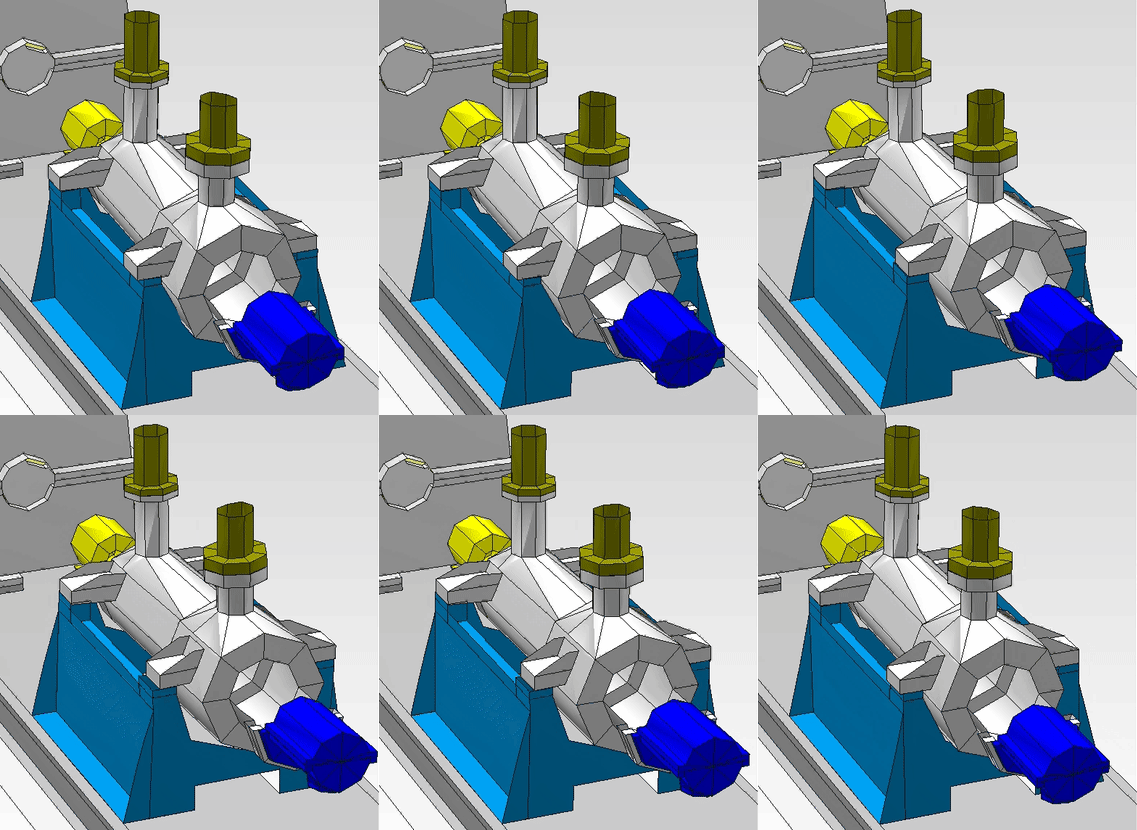
ODS animation showing looseness between the pump and its pedestal.
How Was the Resonance Problem Resolved?
Simple Mechanical Correction with Analytical Validation
Corrective Action:
Properly torqued the inboard and outboard pump casing-to-pedestal bolts to specified values
Although the solution appeared simple, MSI validated the fix using FEA.The FEA demonstrated that looseness at the outboard feet caused the observed drop in natural frequency and confirmed that restoring proper bolt preload eliminated the resonance condition.
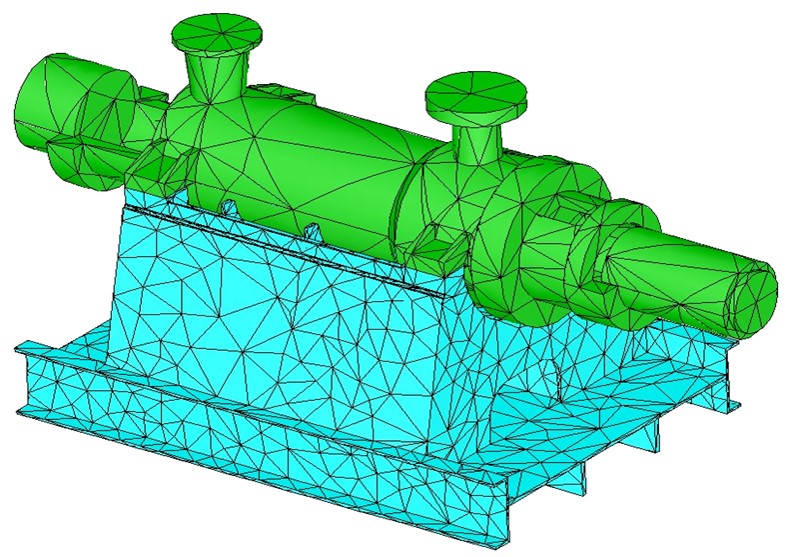 FEA model constructed to confirm the solution and to avoid costly and time-consuming trial and error problem-solving.
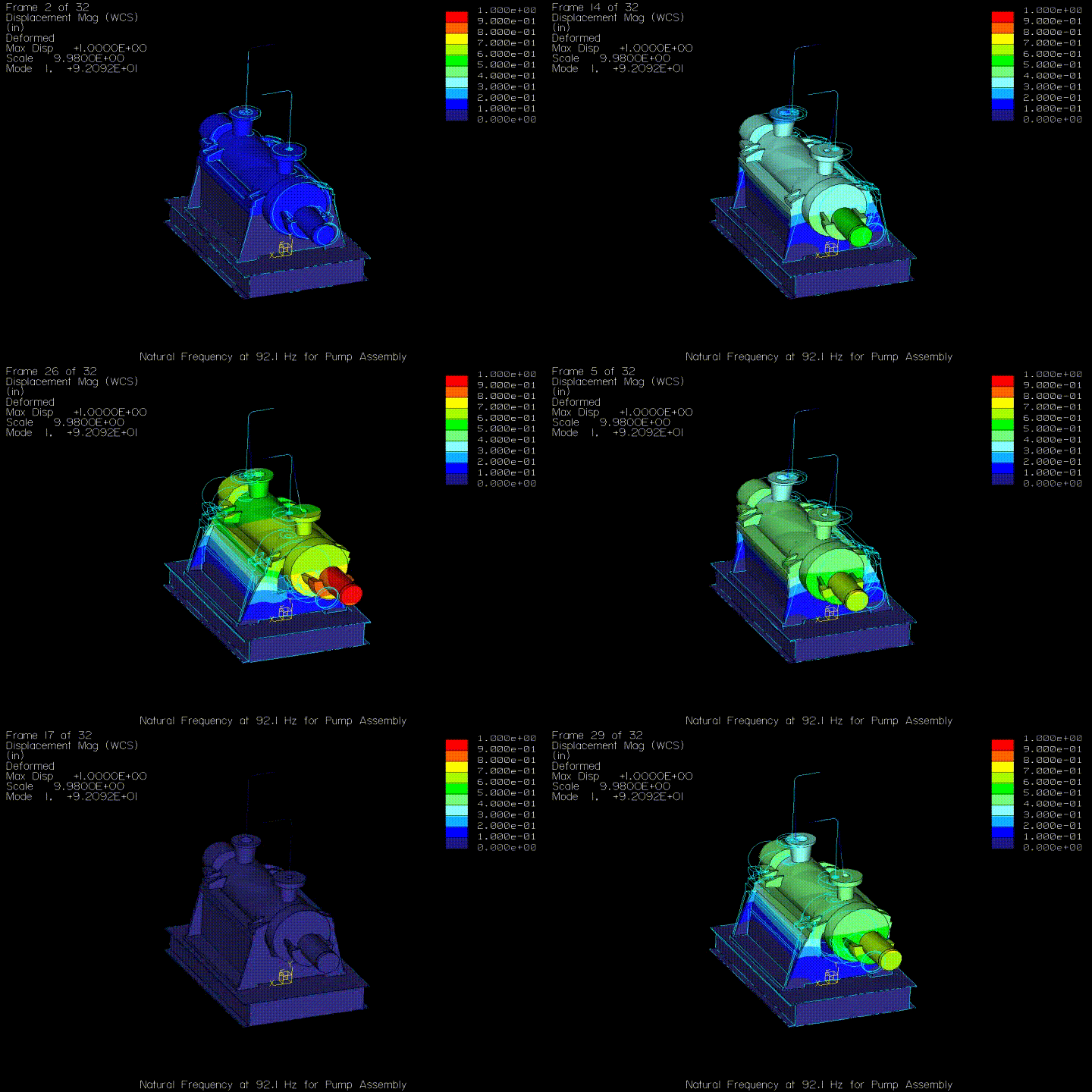
FEA results show a pump natural frequency at 92.1 Hz with all bolted foot connections secure. This is an acceptable 16% separation margin from running speed so is not resonant.
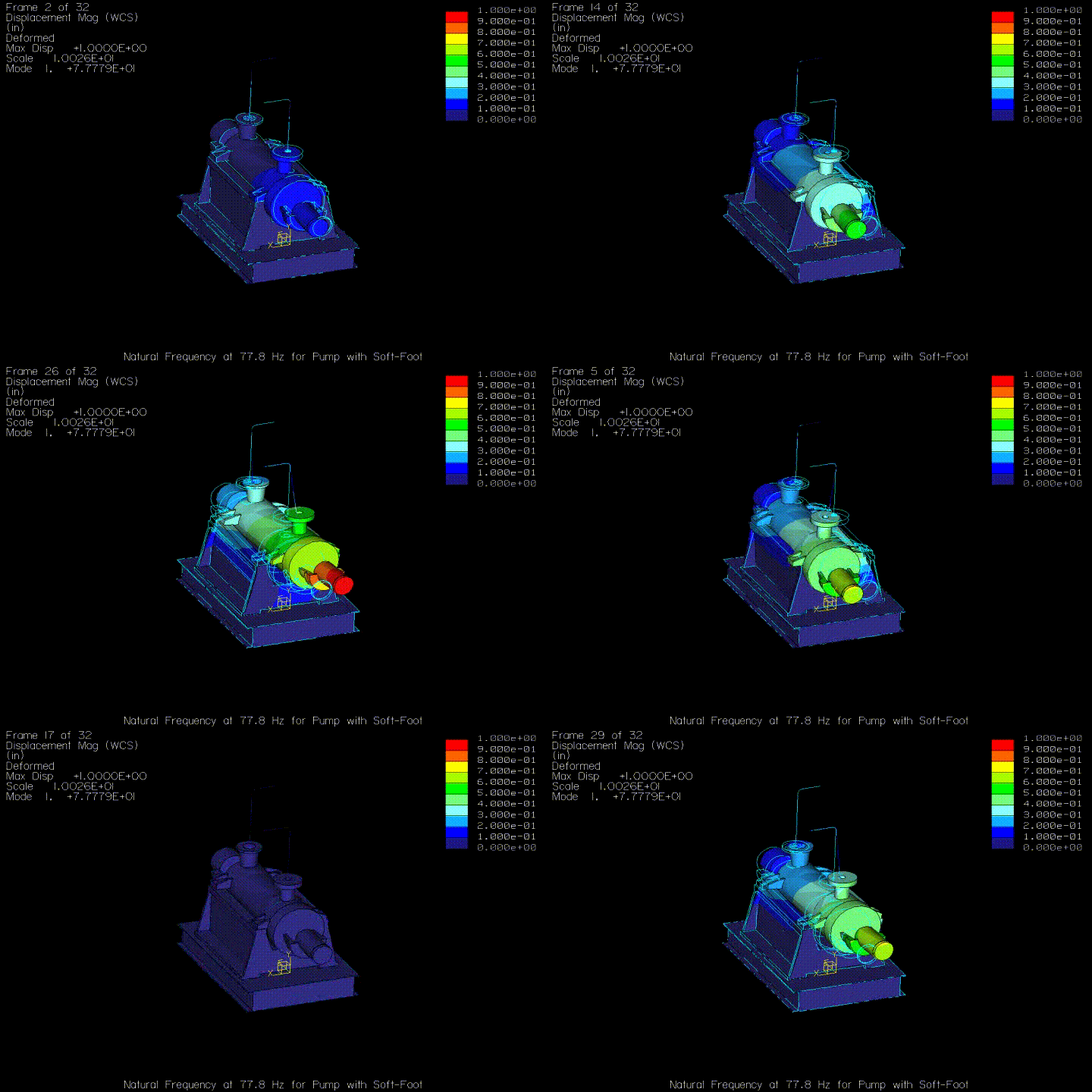
FEA model with the simulated “soft foot” on the one outboard foot predicts that the natural frequency drop to 77.8Hz which is a reasonable match to the test data (76.2Hz). The resultant separation margin of about -5% between running speed and the lightly damped natural frequency created the observed resonance problem.
Water Purification Plant Pre-Construction Specialized Vibration Testing for Future Improvements
Why Is Natural Frequency Analysis Critical for Nuclear Pumps?
Natural frequency shifts—caused by plant aging issues such as looseness, soft foot, or structural degradation—can bring rotating equipment into resonance even when operating speed remains unchanged. In nuclear applications, identifying these issues early is essential to maintaining safety, reliability, and regulatory compliance.
Frequently Asked Questions
What causes resonance in rotating machinery including nuclear charge pumps?
Resonance typically occurs when a pump’s lightly damped structural natural frequency aligns closely with its operating speed. This can be caused by soft foot, looseness, support degradation, etc.
Can soft foot cause erratic vibration behavior?
Yes. Soft foot introduces non-linear stiffness, leading to unstable vibration amplitude and phase response, especially near resonance.
How close does a natural frequency need to be to running speed to cause resonance?
In this case, resonance occurred when a lightly damped natural frequency shifted to within 5% of running speed.
Why use Experimental Modal Analysis (or impact) testing instead of visual inspection?
EMA identifies dynamic characteristics such as natural frequencies and mode shapes that cannot be detected through visual inspection alone. It can also be performed relatively quickly and generally without impact machine availability.
Can resonance be fixed without pump disassembly?
Yes. As demonstrated in this case, correcting support conditions and restoring structural stiffness resolved the issue without dismantling the pump.