
Why Did a Nuclear Feedwater Pump Experience Sudden Vibration Step Changes?
Summary
A 1145 MW nuclear power plant started to experience sudden, cyclic vibration step changes on a turbine-driven feedwater pump (Figures 1 and 2). The unusual vibration occurred on only one of two proximity probes, while a speed pickup probe also temporarily lost its signal (Figure 3).
Mechanical Solutions (MSI) performed specialized vibration testing, including Experimental Modal Analysis (EMA or Impact Testing), Operating Deflection Shape (ODS) testing, and Continuous Monitoring plus Analysis of available plant data. Analysis of the results indicated that potential residual magnetism in the rotor system was contributing to the abnormal vibration readings. VibVue® Motion Magnified Video can be used to identify potential system vibration issues.
MSI recommended inspection of the turbine grounding system, riding brush, voltage and amperage, and comparison of residual magnetism between the operating pumps. The plant was able to adjust the vibration set point with input from MSI avoiding an immediate power reduction.
Most importantly, based on MSI’s recommendation, the plant was able to continue full load operation until the next outage.
What Caused the Sudden Vibration Changes in the Nuclear Feedwater Pump?
The nuclear power plant was experiencing sudden, cyclic step changes in shaft vibration readings mostly at running speed from a turbine-driven feedwater pump. The problem symptoms indicated the possibility of Morton Effect.
The unusual behavior was isolated to one of the pump's two proximity probes. A speed pickup probe also temporarily lost its signal, making it necessary to determine whether the problem originated from the rotating equipment, instrumentation, or another system-related source.
The equipment was a high energy single-stage, double-suction, turbine-driven centrifugal feedwater pump.
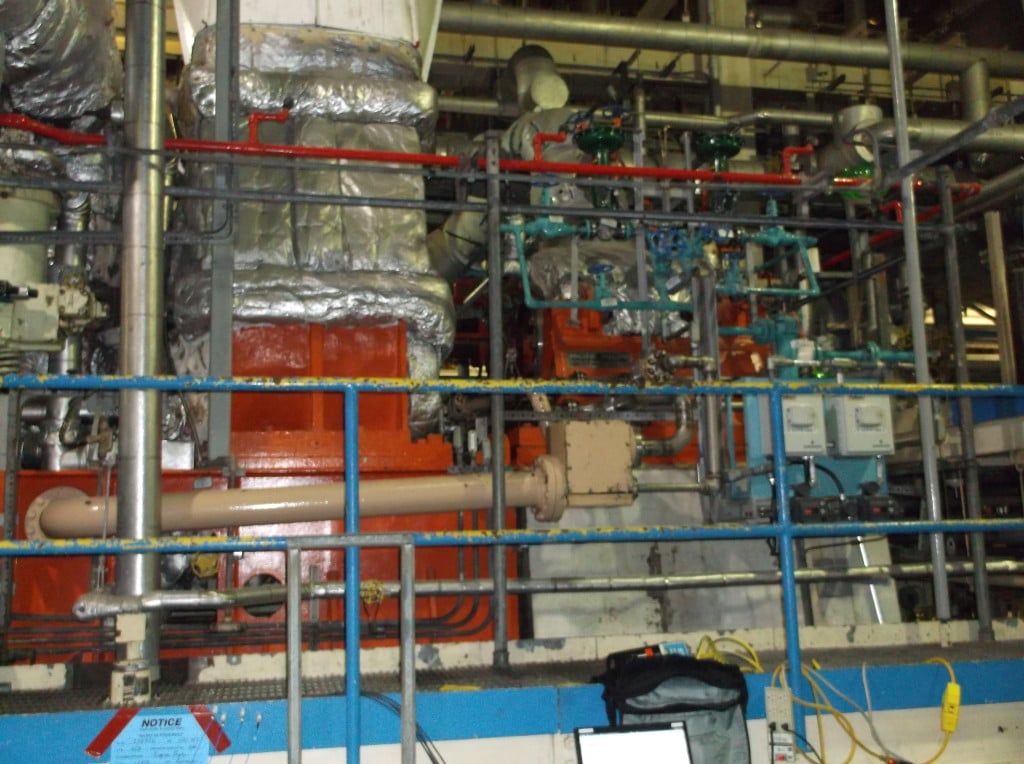 Figure 2: Pump cross section
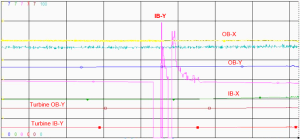 Figure 3: Example vibration plot showing periodic spike in pump proximity probe shaft vibration levels - why MSI was called into help.
How Did MSI Investigate the Feedwater Pump Vibration?
MSI combined plant operating data with specialized field vibration testing to identify the source of the abnormal readings.
The investigation included:
- Experimental Modal Analysis (EMA)
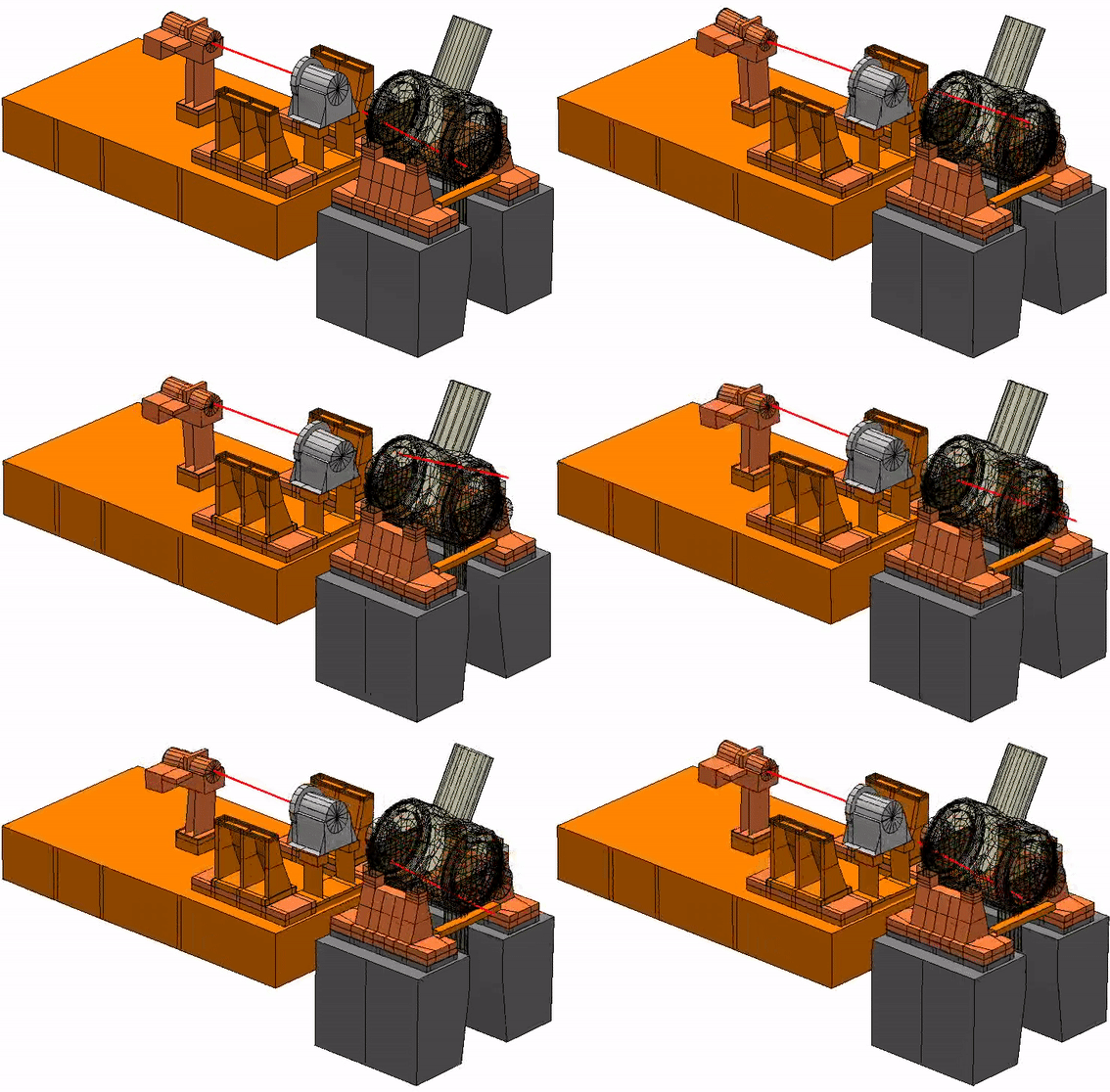
- Operating Deflection Shape (ODS) testing (Figures 4 and 5)
- Continuous monitoring
- Review of existing plant vibration data
- Field vibration measurements
- Feedwater pump orbit analysis
- Evaluation of turbine and pump bearing housing vibration
The testing provided a broader view of the high energy pump's dynamic behavior and helped distinguish the abnormal proximity probe readings from actual pump and turbine vibration.
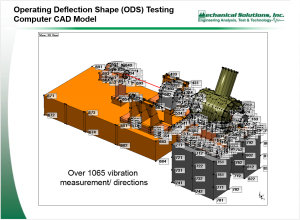 Figure 4: The ODS test involved carefully recording vibration with triaxial accelerometers at over a thousand different locations on the drive-train system including the nearby floor and piping. Shaft proximity probe data was also included in the ODS animation. The CAD model shown above is quickly prepared by MSI based on field measurements and available drawings.
What Did the Vibration Testing Reveal?
The turbine and pump bearing housing vibration levels were low and acceptable for this type of machine.
ODS testing identified a minor soft-foot condition, but the testing indicated that it was not responsible for the rotor vibration issue.
Comparison of the plant data and MSI's field measurements led to the conclusion that potential residual magnetism in the rotor system was the likely source of the unusual vibration behavior.
 Click image to animate
Figure 5: ODS animation based on measured test data (not an FEA simulation) showing relative and exaggerated motion of the drive-train system. The overall vibration levels are acceptable for this type of machine. The ODS testing identified a minor soft-foot condition (typical aging plant issue), but it was not responsible for the rotor vibration. MSI concluded that potential residual magnetism in the rotor system was the likely source of the unusual vibration behavior.
How Can Residual Magnetism Affect Rotating Machinery Vibration?
Residual magnetism can influence the behavior of a rotating system and may contribute to unusual shaft vibration or proximity probe readings.
Because the vibration behavior did not correspond to elevated bearing housing vibration, MSI recommended continuing operation and investigating the turbine grounding system and riding brush mechanism at the next opportunity.
More specifically, MSI recommended collecting and analyzing:
-
- Turbine grounding voltage
- Grounding current/amperage
- Riding brush condition
- Residual magnetism measurements
- Comparative measurements from the other operating pump
What Was the Solution for the Nuclear Feedwater Pump?
Based on the testing and analysis, MSI recommended increasing the vibration set point to account for the elevated vibration levels predicted to result from residual magnetism.
This adjustment allowed the nuclear power plant to remain online until the next scheduled outage, when additional investigation could be performed.
The approach helped the plant avoid an immediate power reduction while providing a plan for further investigation of the rotor, grounding system, and residual magnetism.
What Vibration Testing Methods Were Used?
MSI used a combination of dynamic testing and condition monitoring techniques to investigate the feedwater pump vibration problem.
Experimental Modal Analysis (EMA)
EMA or impact testing is used, preferably while the machinery is operating, to determine the natural frequencies of the structural and rotordynamic systems. A key deliverable is a Frequency Response Function (FRF) plot which also indicates the damping associated with each natural frequency
Operating Deflection Shape (ODS)
ODS testing helped visualize how the pump and associated structure were moving during operation and helped determine that the structural behavior was not contributing to the shaft vibration issue.
Continuous Monitoring
Plant and field vibration data were reviewed to identify patterns and determine whether the unusual readings represented an actual machinery vibration problem or another source.
What Was the Impact on the Nuclear Plant’s Operations?
The investigation provided the plant with a technically supported explanation for the unusual vibration behavior and a path forward for additional investigation.
Most importantly, the recommended vibration set-point adjustment allowed the plant to avoid an immediate down-power condition and remain online until the next outage.
For critical nuclear power plant rotating equipment, identifying the actual source of an abnormal vibration indication can help prevent unnecessary shutdowns, reduce troubleshooting time, and support more informed maintenance decisions.
Frequently Asked Questions
What caused the sudden vibration step changes?
The investigation indicated that potential residual magnetism in the rotor system was the likely cause of the unusual, cyclic vibration behavior.
Why did only one proximity probe show the vibration changes?
The unusual vibration behavior was isolated to one of the two proximity probes. Specialized vibration testing was therefore required to determine whether the readings represented actual machinery vibration or another dynamic or instrumentation-related effect.
What type of pump was investigated?
The equipment was a high energy single-stage, double-suction, turbine-driven centrifugal feedwater pump at a nuclear power plant.
What vibration testing did MSI perform?
MSI performed Experimental Modal Analysis (EMA), Operating Deflection Shape (ODS) testing, and condition monitoring, along with analysis of plant data and field vibration measurements.
Did MSI find excessive bearing housing vibration?
No. Vibration levels measured at the turbine and pump bearing housings were low and acceptable for this type of machinery.
Was soft foot responsible for the vibration problem?
ODS testing identified a minor soft-foot phenomenon, but MSI determined that it was not related to the rotor vibration issue.
What did MSI recommend?
MSI recommended inspecting the turbine grounding system and riding brush mechanism, measuring voltage and amperage, and comparing residual magnetism between the operating pumps.
How was an immediate shutdown avoided?
The findings supported an increase in the vibration set point to account for the elevated vibration levels predicted from residual magnetism. This allowed the plant to remain online until the next scheduled outage.
Why is specialized vibration testing important for nuclear feedwater pumps?
Feedwater pumps are critical rotating equipment. Specialized vibration testing can help distinguish between actual mechanical vibration, structural dynamic behavior, instrumentation-related readings, and other sources of abnormal vibration before unnecessary equipment shutdown or replacement is undertaken.