Sub-Synchronous Vibration In A Reverse Osmosis Membrane Vertical Turbine Pump
Summary
A construction firm overseeing a water treatment plant expansion in California encountered excessive vibration in four of six newly installed reverse osmosis membrane feed pumps. The vertical turbine pumps (VTPs, Figure 1) suffered from excessive vibration occurring in the above-ground pump structure (Figure 2 and 3). The four pumps were failing the specified Hydraulic Institute (HI)/ANSI vibration acceptance standards and were close to triggering a project delay penalty clause.
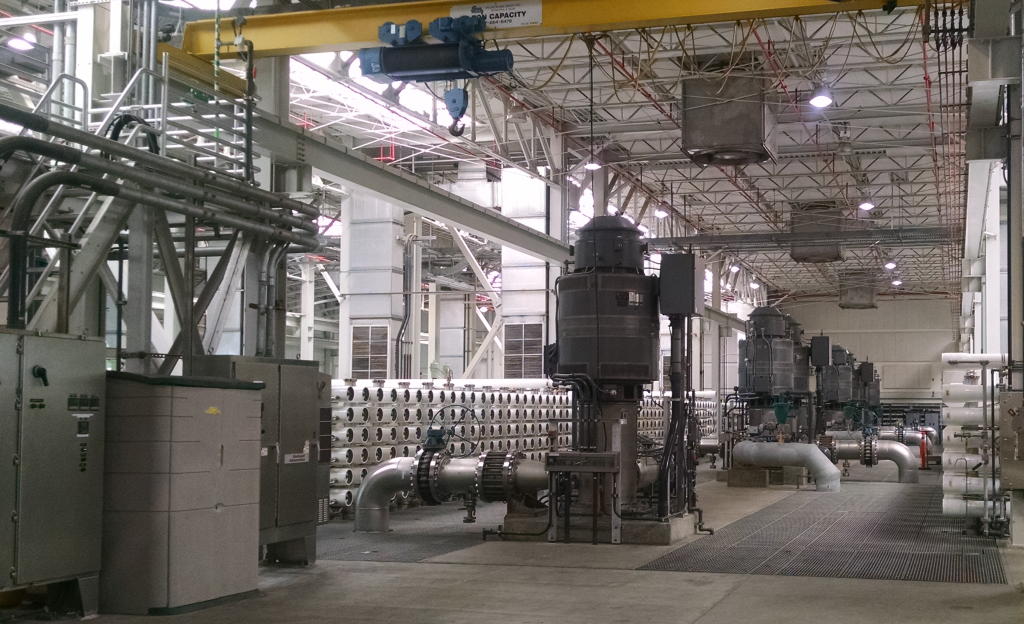
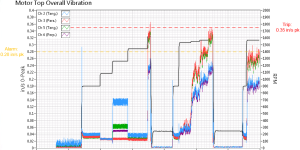
Figure 2. Overall vibration trend plot showing vibration amplitude versus time produced by an independent company was required after installation by the Engineering firm’s specification. The excessive overall vibration on 4 of the 6 pumps led to a troubleshooting effort.
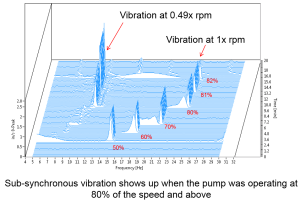 Figure 3. Waterfall plot showing excessive vibration at a frequency of 0.49 x running speed when the four pumps were operating at or above 80% of maximum running speed.
Mechanical Solutions (MSI) conducted advanced vibration testing including Experimental Modal Analysis (EMA), Operating Deflection Shape (ODS), and condition monitoring. This project took place before Motion Magnified Video (MMV) products such as MSI’s VibVue® existed.
The advanced testing revealed that structural resonance (“trunnion mode”) was being excited by sub-synchronous vibration (SSV) caused by rotordynamic fluid whirl in the pump bearings (Figure 4).
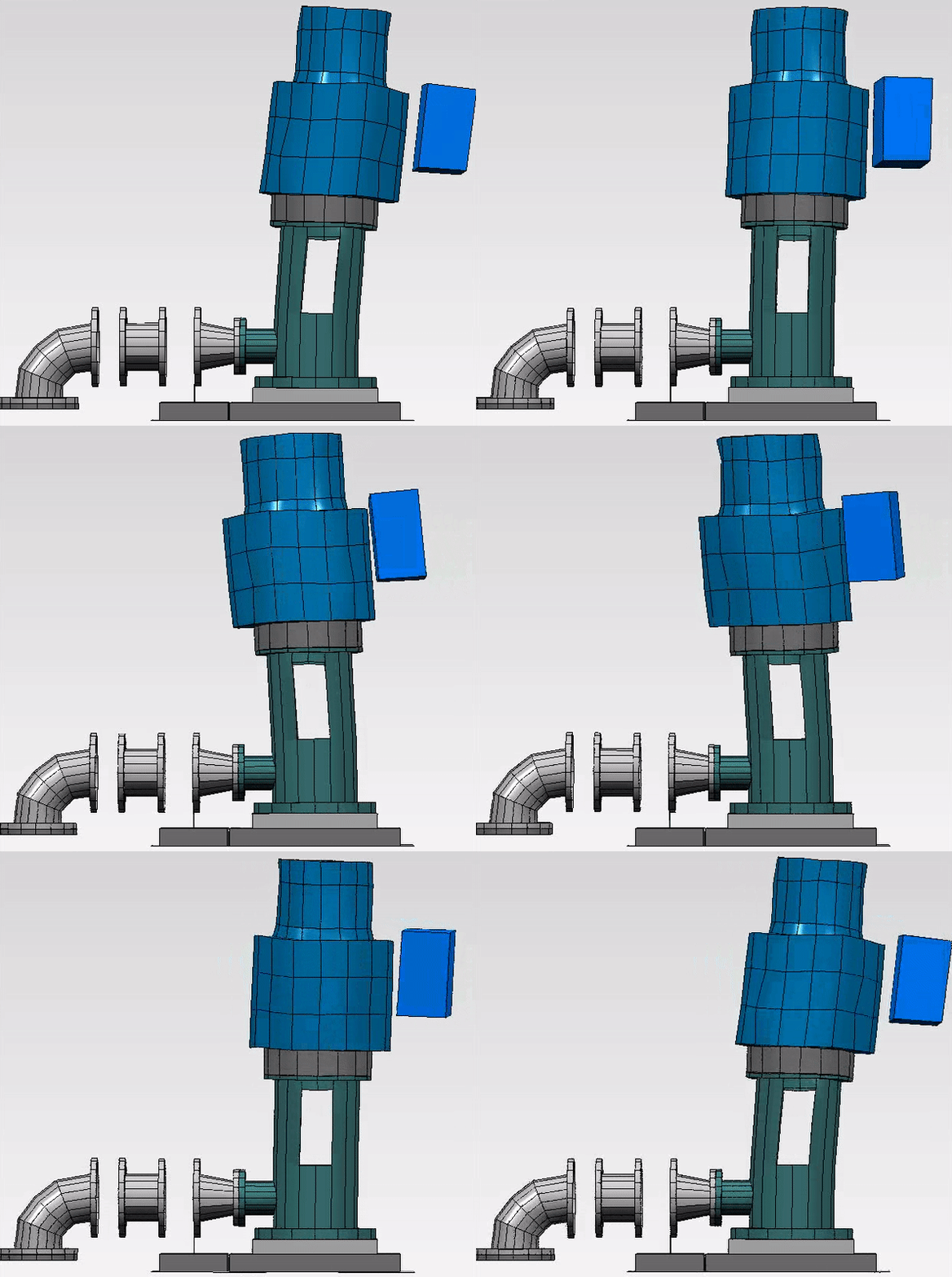 Figure 4. ODS animation at the sub-synchronous frequency when an above-ground structural natural frequency was being excited at 0.49 x running speed due to fluid whirl in the below-ground pump bearing
MSI recommended increasing the diametral clearance of the pump sleeve bearings to eliminate the excitation source. This successful solution eliminated the resonance excitation forces reducing vibration levels to acceptable levels, and helped the project remain on schedule.
What Causes Sub-Synchronous Vibration in Reverse Osmosis Vertical Turbine Pumps?
Sub-synchronous vibration (SSV) occurs when vibration frequencies develop below the running speed of rotating equipment, often due to fluid-induced instabilities within bearings or seals.
In vertical turbine pumps used in reverse osmosis systems, SSV can result from:
- Fluid whirl within sleeve bearings
- Tight shaft-to-bearing clearance
- Rotordynamic instability
- Structural resonance amplification
If left unresolved, these issues can lead to:
- Failure to meet vibration specifications
- Machinery and plant commissioning delays
- Excessive structural vibration
- Reduced equipment reliability and operating life
- Increased maintenance costs
What Vibration Analysis Methods Were Used to Diagnose the Pump Problem?
MSI implemented several advanced diagnostic techniques to identify the vibration source.
Experimental Modal Analysis (EMA) testing
Experimental Modal Analysis testing was performed to determine the natural frequencies and dynamic characteristics of the pump structure.
Operating Deflection Shape (ODS)
ODS testing was used to visualize how the structure moved during operation, helping identify resonance conditions.
Condition Monitoring
Continuous vibration monitoring helped identify sub-synchronous frequency components occurring during pump operation.
Together, these methods allowed engineers to isolate the interaction between rotordynamic forces and structural resonance.
What Was the Root Cause of the Pump Vibration?
The investigation determined that the above-ground pump structure was experiencing structural resonance.
Structural Resonance (“Trunnion Mode”)
The pump structure exhibited a “trunnion” mode vibration pattern, where:
- The above-ground structure pivots in one direction
- The below-ground structure swings in the opposite direction
This behavior occurs when the structure vibrates as a rigid body at its natural frequency (Figure 4).
Rotordynamic Fluid Whirl
The resonance was being excited by sub-synchronous vibration caused by rotordynamic fluid whirl within the below-ground pump bearings.
The whirl occurred at approximately:
- 44% – 49% of running speed
This instability was likely caused by:
- Tight clearance between the pump shaft and plain sleeve bearings
How Was the Pump Vibration Problem Solved?
After identifying the excitation mechanism, MSI recommended corrective actions designed to remove the source of sub-synchronous vibration.
Recommended Solution
- Eliminate rotordynamic instability responsible for fluid whirl increase the diametral clearance of the pump sleeve bearings
Increasing the bearing clearance:
- Removed the excitation force
- Prevented structural resonance from being triggered
- Reduced overall vibration levels
What Was the Impact of the Vibration Analysis?
The solution provided significant operational and project benefits.
Key Outcomes
- Eliminated the source of sub-synchronous vibration
- Prevented excitation of the structural trunnion mode
- Allowed pumps to meet HI/ANSI vibration standards
- Helped avoid project delay penalties
- Ensured reliable operation of the reverse osmosis pumping system
The diagnostic work helped both the OEM and construction firm resolve the issue quickly, preventing costly delays in the plant expansion project.
Frequently Asked Questions
What is sub-synchronous vibration in pumps?
Sub-synchronous vibration occurs when a machine vibrates at a frequency lower than its rotational speed, often caused by fluid whirl, oil whirl, or rotordynamic instability.
Why do all style of pumps and other rotating machinery experience structural resonance?
Structural resonance occurs when operating vibration frequencies match the natural frequency of the rotating machinery structure, amplifying vibration and causing excessive movement. Vibration can be amplified by factors of 10 or more when a natural frequency is excited creating a resonant condition.
What is rotordynamic fluid whirl?
Fluid whirl is a self-excited vibration phenomenon in rotating equipment bearings, where fluid forces create an orbiting motion of the shaft at a fraction of the running speed.
How can pump vibration be diagnosed?
Pump vibration can be diagnosed using advanced techniques such as:
- Condition monitoring
- Vibration spectrum analysis
- Motion Magnified Video (MMV) using a product such as VibVue®
- Experimental Modal Analysis (EMA)
- Operating Deflection Shape (ODS)
How can sub-synchronous vibration be corrected?
Corrective actions may include:
- Increasing bearing clearances
- Improving rotor stability
- Modifying structural stiffness
- Eliminating excitation sources
Read About: Wastewater Treatment Blower High Frequency Audible Tone